The magazine wetnotes shows a picture of the Greenland series taken with Ortwin Khan. Too much clothes for a centerfold, but well dressed regarding dry gloves, I made it to the front page of issue #40.
The image hints to the long time test report of dry glove ring systems.
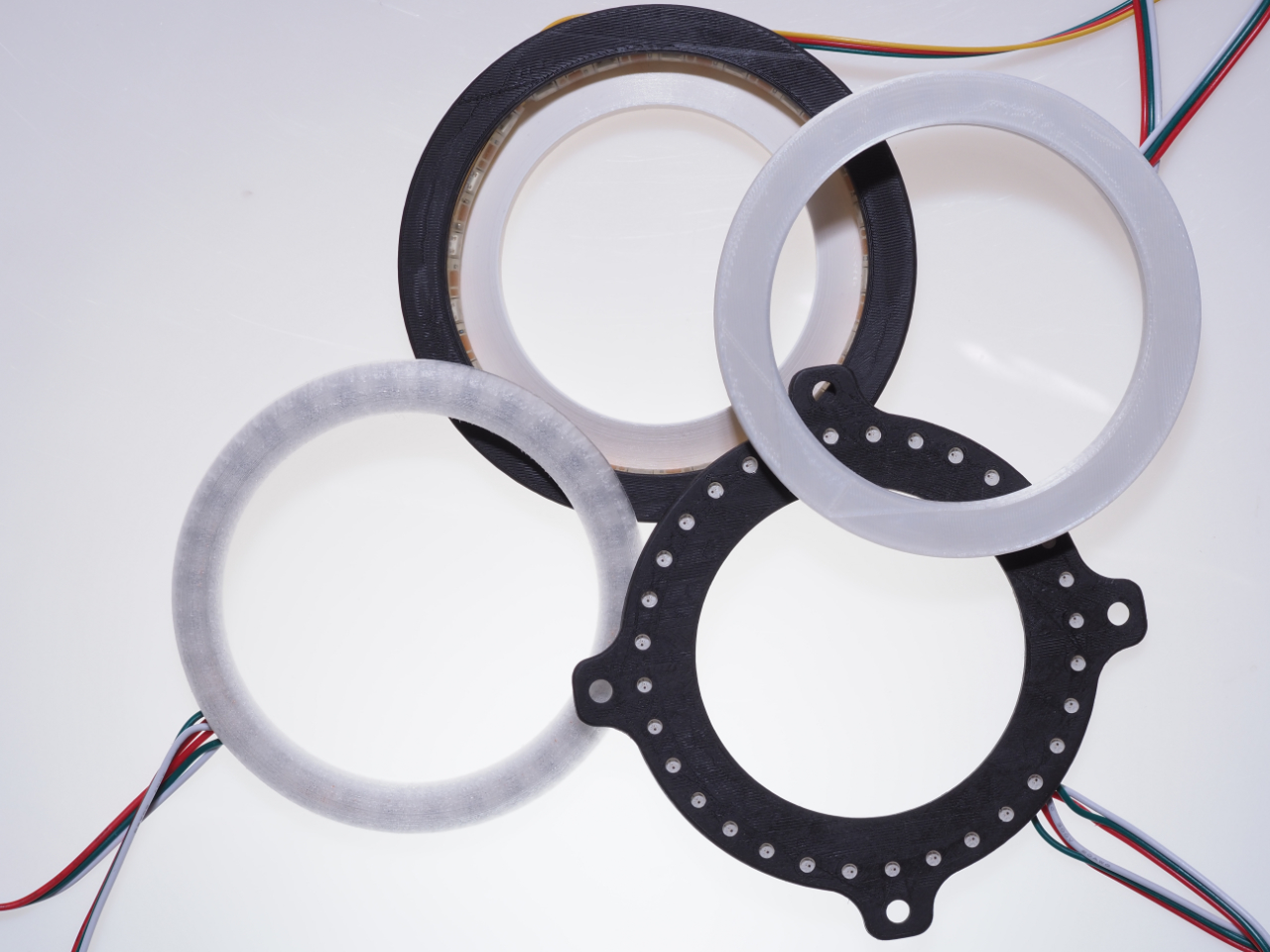
I improved and stabilized the setup for the LED Ring Service. The functionality of the service remains unchanged as implemented in the prior version 1.9.5.
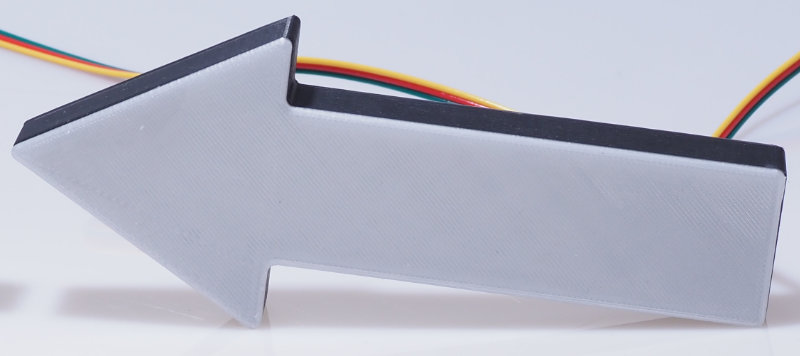
I extended the hardware available for the LED Strip Controller. The arrow may be mounted on the front panel of a photo booth or, as a variant, mounted sunken into the front panel. The arrow is lit by sideways mounted LEDs. This creates a smooth and evenly distributed light effect. The prototype has a length of 140mm from tail to tip, a width of 300 at the tail and 55mm across the arrow head. The depth is determined by the LED strip size and results in 17mm. A sunken mounted arrow protrudes 2mm above the front panel.
To control the LEDs of the arrow, I extended the LED Strip Controller firmware as well as the LED Ring Service application. One or two identical arrows may be lit at the same time.
I overhauled the adapters for angle finders and eyecups. They now have a better fit on the cameras.
In addition to the previously existing adapters, I added a new one that allows to mount the old OM Varimagni angle finder to OM-D E-M5 II, E-M5 III, E-M10 II und EM10 III.
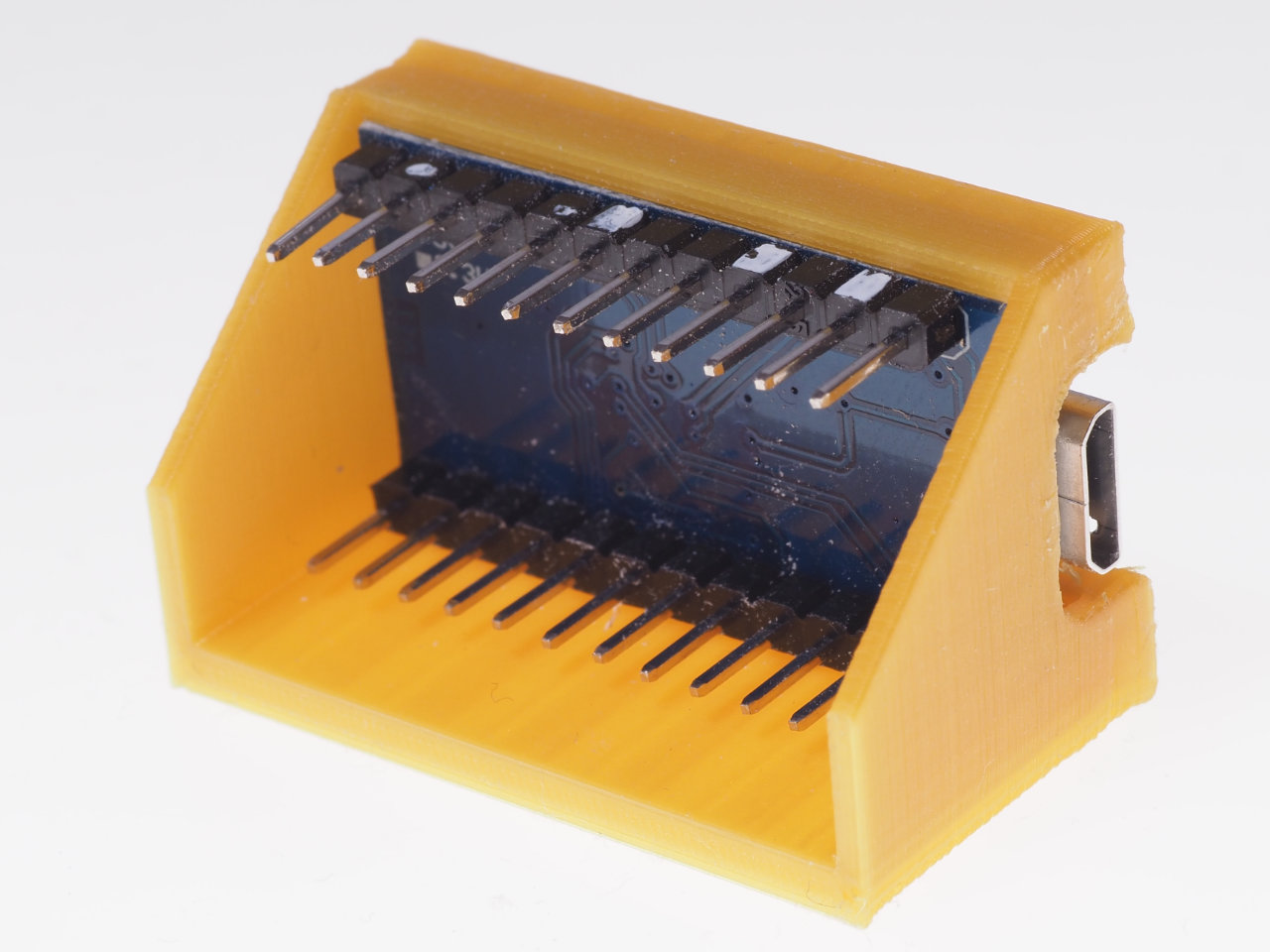
I improved automated recognition of controllers in the LED Ring Service. it’s even more stable now and supports also Controller.Nano.
The setup has been extended to allow selection of the controller type. This allows the setup to automatically detect controllers and to configure the LED Ring Service for a certain controller type. This avoides the need for manual configuration if updating the Service in a Controller.Nano environment.
USB connectivity of the Controller Micro family has been improved. Controllers are now recognized by the operating system through a unique serial number. This fact stabilizes COM port assignment, even across software updates.
The new firmware can be downloaded on the LED Ring Service page.
I improved the LED Ring Service even further. It now detects controller ports automatically on start-up. Changes in COM port assignment that happen sometimes after Windows updates are recognized, resulting in a stable and continous operation.
In addition, I extended the configuration options to allow free running countdowns to be parameterized by the countdown duration sent by dslrBooth.
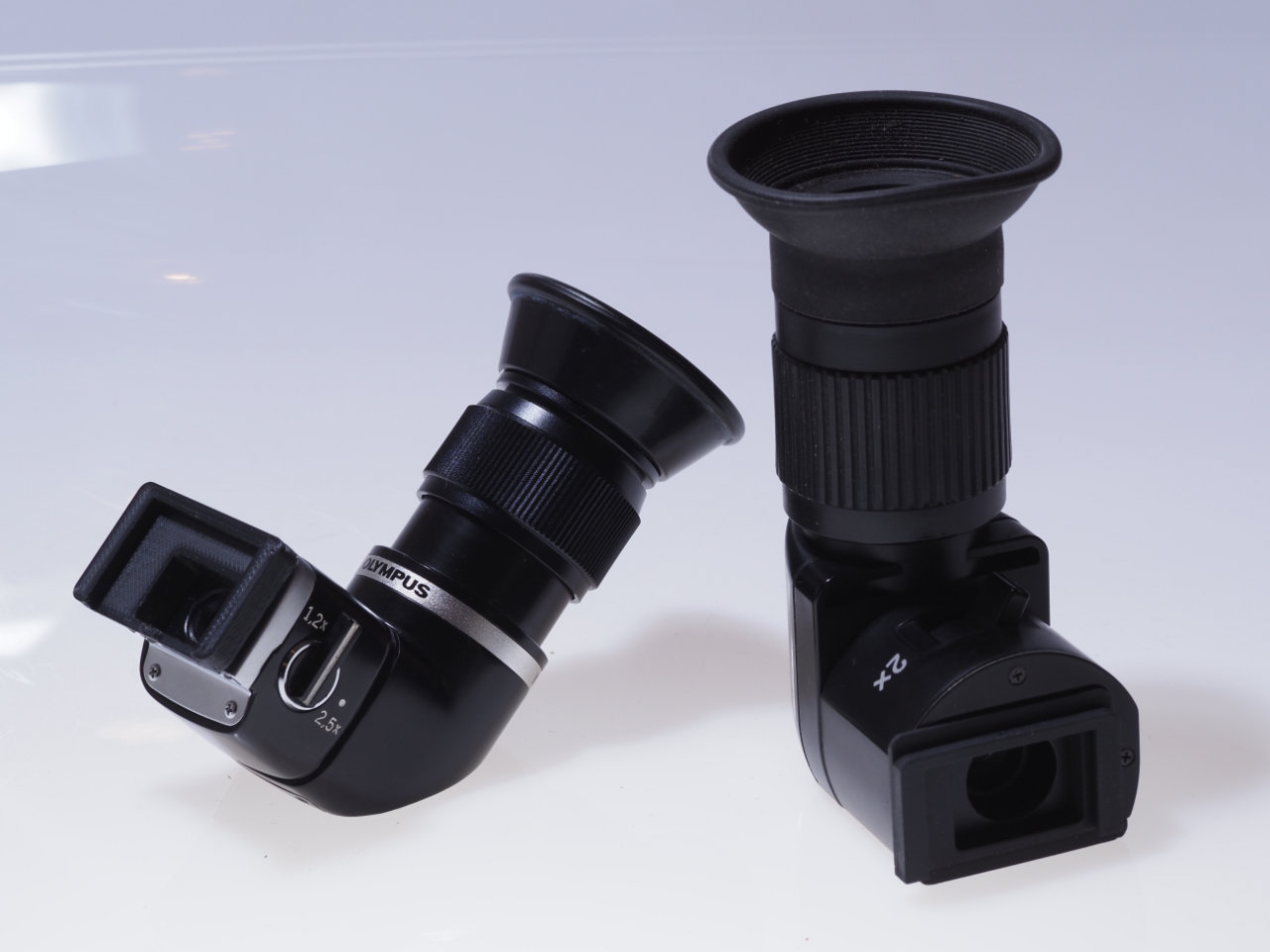
I got an Olympus Varimagni angle finder (the old OM system one, from the 70ies) to take measurements. I designed an adapter to mount it on the E-M1 family cameras.
Here you see the Olympus Varimagni (left) and the Olympus VA-1 (right), both with E-M1 family adapters.
I extended the firmware of the LED Ring Controller Micro and LED Strip Controller Micro. A new function now allows to switch relais delayed. In addition to the immediately efective relais command, a delayed one may be specified. This allows to e.g. turn off effects after a given time without the need of sending a new command.
The LED Ring Service was adapted to support the new functionality.
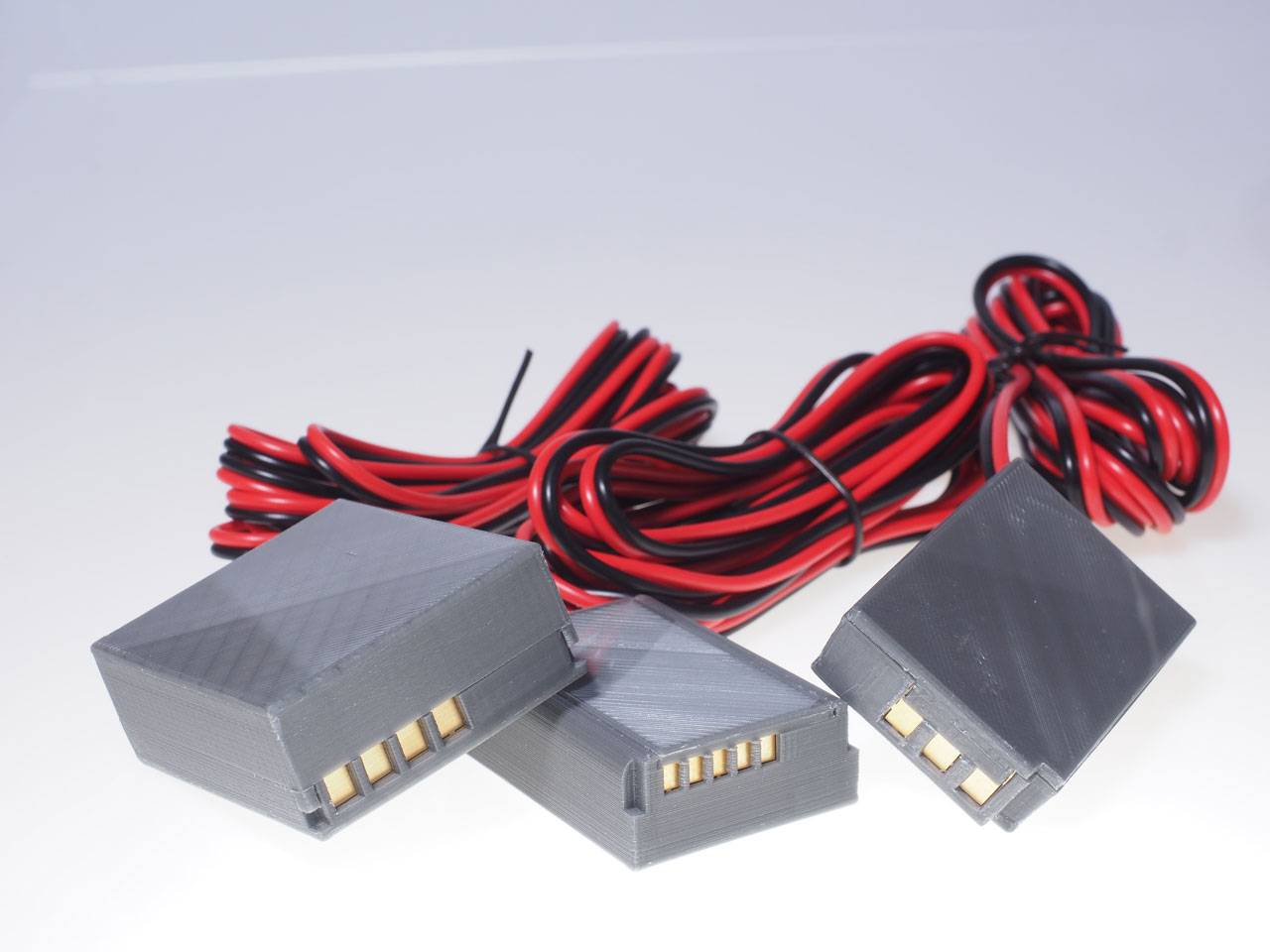
Hans Vollmer built an adapter that allows to power a camera from a power bank. The power bank has to implement the Quick Charge 3.0 or 2.0 standard in order to work with this solutuion.